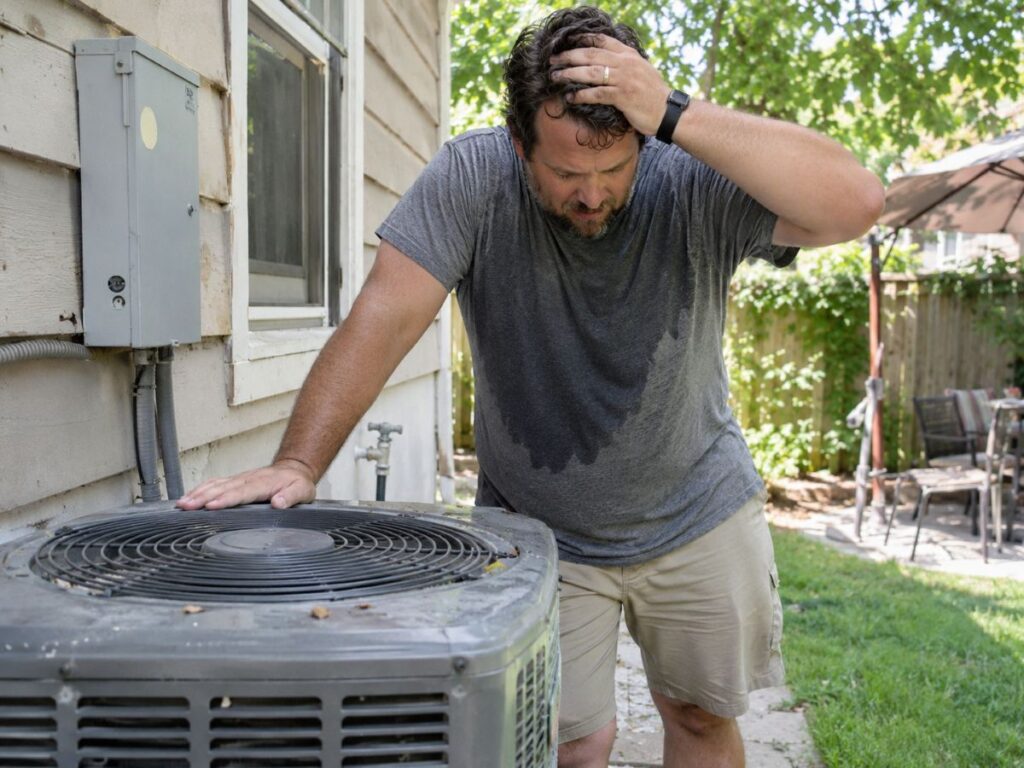
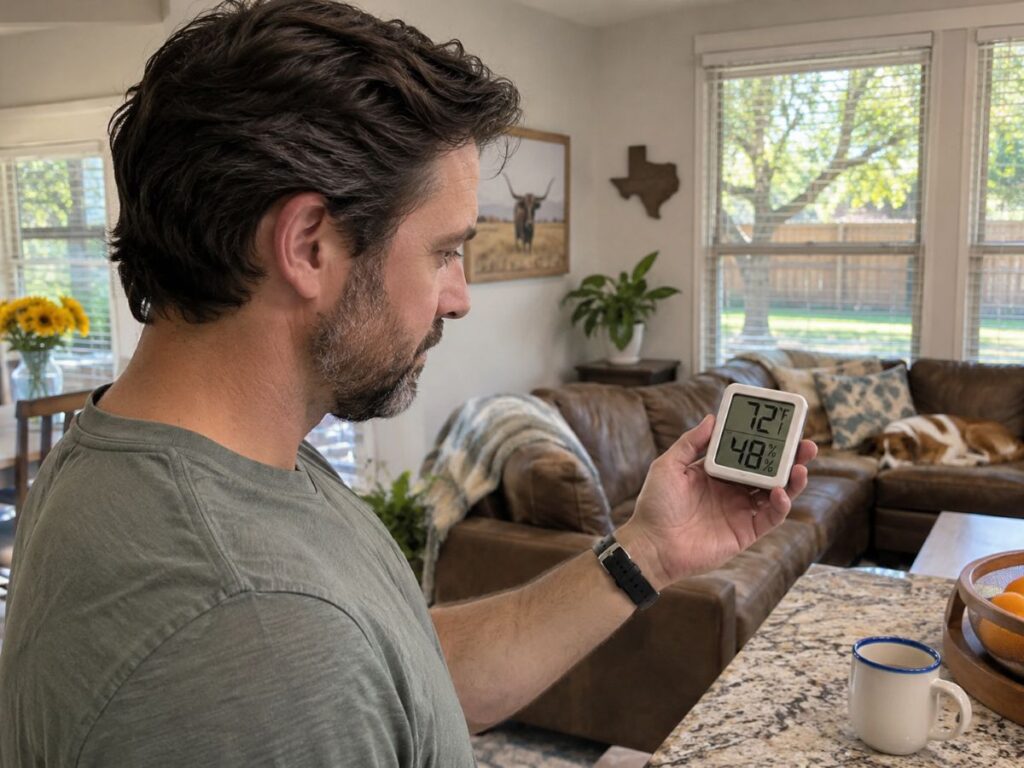
A sticky, musty house is uncomfortable, and it can also lead to mold, odors, and an air conditioner that never seems to rest. High humidity in house interiors is common in North Texas, where warm, moist air is part of life for much of the year. The good news is that most humidity problems have a cause you can find. This guide explains why your home may feel so humid, which fixes you can try today, and when equipment such as a dehumidifier or an AC repair is the better answer.
| Quick Take Find the source first: weather, AC performance, duct leaks, or daily moisture. Set the thermostat fan to Auto, use exhaust fans, and fix leaks before buying equipment. If humidity stays high across the whole house, a whole-house dehumidifier or an AC check is the next step. |
Why Is My House So Humid?
Humidity builds when more moisture enters the house than leaves it. In summer, the outdoor air is already humid, and every door opening and every small gap lets some of it in. Inside, showers, cooking, laundry, and even breathing add more. Your air conditioner is supposed to remove a large share of that moisture, so when the house stays damp, the AC is often part of the story.
- A dirty or restricted system: A clogged filter, dirty coil, or blocked condensate drain reduces how well the AC removes moisture.
- An oversized AC: A unit that is too large cools the house quickly and shuts off before it has pulled enough moisture out of the air.
- Leaky ducts: Return or supply leaks in an attic or crawl space can draw in hot, humid air.
- Hidden leaks: A slow plumbing leak, a wet crawl space, or a roof leak adds moisture you cannot see.
- Daily habits: Long hot showers, cooking without a vent fan, and drying clothes indoors all raise humidity.
Quick Fixes You Can Try Today
Before you spend money, try the changes that cost little and often make a visible difference:
- Use exhaust fans: Run the bathroom fan during and after showers, and the kitchen vent while cooking.
- Set the thermostat fan to Auto: With the fan set to On, moisture on the cooling coil can blow back into the house between cycles. Auto lets the moisture drain away.
- Keep windows closed on humid days: Opening windows when it is muggy outside brings that moisture straight in.
- Vent the dryer outdoors: A dryer that leaks into a closet or garage adds a surprising amount of moisture.
- Fix drips and leaks: Check under sinks, around water heaters, and near the outdoor AC line for signs of water.
- Use a portable dehumidifier in small trouble spots: It can help in one room, such as a bathroom or closet, but it will not control a whole house.
Give these changes a few days and watch your readings with a simple hygrometer. If the number is not moving toward the healthy range, look deeper at the cooling system.
Check Your Air Conditioner First
Your AC is the main dehumidifier in the house, so it deserves the first look. Replace the air filter on schedule, keep the outdoor unit clear of debris, and make sure the condensate drain is not clogged. These are simple steps that keep the system removing moisture the way it should.
If the house stays humid even though the AC runs often, the system may be struggling. A unit that short cycles, runs without cooling well, or leaves water around the indoor unit needs a professional look. In many cases a timely AC repair restores both cooling and moisture removal. If the problem is a system that is simply the wrong size for the house, a technician can explain the options.
Hidden Moisture Sources in Ducts and Crawl Spaces
Ductwork that passes through a hot attic or a damp crawl space can leak. Those leaks pull in unconditioned air, which can be hot, humid, and dusty, and spread it through the house. Signs of a duct problem include rooms that never feel comfortable, uneven airflow, and humidity that rises when the system runs.
Professional duct sealing closes those gaps so the air you pay to cool stays inside the ducts. It can improve comfort and lower the moisture load at the same time. Wet insulation, rusted metal, and water stains near ducts are other reasons to have a technician inspect the system.
Which Option Fits Your Home?
| Option | Best For | Limits |
|---|---|---|
| Habits and exhaust fans | Everyday moisture from showers and cooking | Does little against humid outdoor air. |
| Portable dehumidifier | One room or a small trouble spot | Needs emptying and covers limited space. |
| AC tune-up or repair | Systems with dirty coils, clogged drains, or poor airflow | Cannot fix a system that is the wrong size. |
| Duct sealing | Leaky ducts pulling in humid attic or crawl space air | Does not remove moisture created inside the home. |
| Whole-house dehumidifier | Persistent humidity across the entire house | Needs professional installation and regular maintenance. |
When a Whole-House Dehumidifier Makes Sense
If the AC is working properly, the ducts are sealed, and the house still feels damp, extra equipment may be the right answer. A whole-house dehumidifier is installed with your HVAC system and removes moisture throughout the home, so you do not need several portable units running in different rooms. It is especially useful in tightly sealed homes and in homes with a damp crawl space or basement.
A technician can check your current readings, review the cooling system, and recommend the right size. Our guide on what humidity your house should be explains the target range to aim for.
Frequently Asked Questions
How do I lower humidity in my house without a dehumidifier?
Use exhaust fans, set the thermostat fan to Auto, keep windows closed on muggy days, fix leaks, and keep your AC filter and drain clean. These steps solve many moderate humidity problems.
What humidity is too high in a house?
Readings above 60 percent are too high. Aim for 30 to 50 percent, and expect summer readings to land at the upper end of that range.
Will running the AC lower humidity?
Yes. An air conditioner removes moisture as it cools the air. It only does this well when it is clean, properly sized, and running through normal cooling cycles.
Why is my house humid even with the AC on?
Common causes include a dirty filter or coil, a clogged drain, an oversized system, leaky ducts, or a moisture source inside the home such as a hidden leak. A system check can narrow it down.
Does a whole-house dehumidifier work with central AC?
Yes. It is installed to work with your HVAC system and ductwork, so it can handle moisture across the whole house. A technician should size it for your home.
| Ready to Get Started? Let Norco Air help you find the cause and fix it for good. Contact Us |
Why is my furnace blowing cold air and then warm?
A short burst of cool air at the start of a cycle is common because the blower waits for the heat exchanger to warm up. If it keeps alternating between cold and warm or shuts off repeatedly, the cause may be a dirty filter, a weak flame sensor, or a safety switch.
Why is my furnace running but not heating?
The blower can run even when the burner is not lighting. Common causes include a thermostat fan setting on ON, a dirty filter, an ignition or flame sensor problem, a gas supply issue, or a tripped safety switch.
Can a dirty filter make a furnace blow cold air?
Yes. A clogged filter restricts airflow, the furnace overheats, and the limit switch shuts off the burner while the blower keeps running. Replacing the filter is the first fix to try.
Is it normal for a heat pump to blow cooler air in heating mode?
Yes, to a degree. Heat pump air is warm but usually not as hot as air from a gas furnace, and it may feel cool briefly during defrost cycles. If the air is truly cold for long periods, the system should be checked.
Should I reset my furnace if it blows cold air?
Turning the furnace power off and back on once can clear a minor fault, but you should not repeat it. If the problem returns, there is an underlying issue that a technician needs to diagnose.
| Ready to Get Started? Let Norco Air find out why your furnace is blowing cold air and get your heat running again. Contact Us |