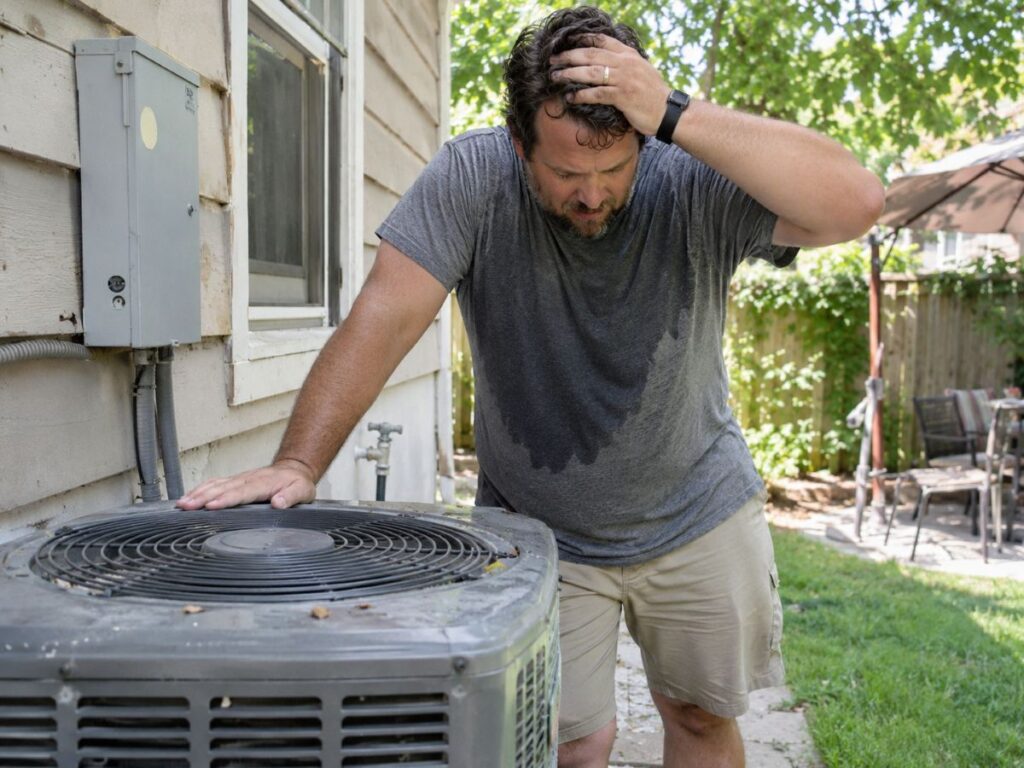
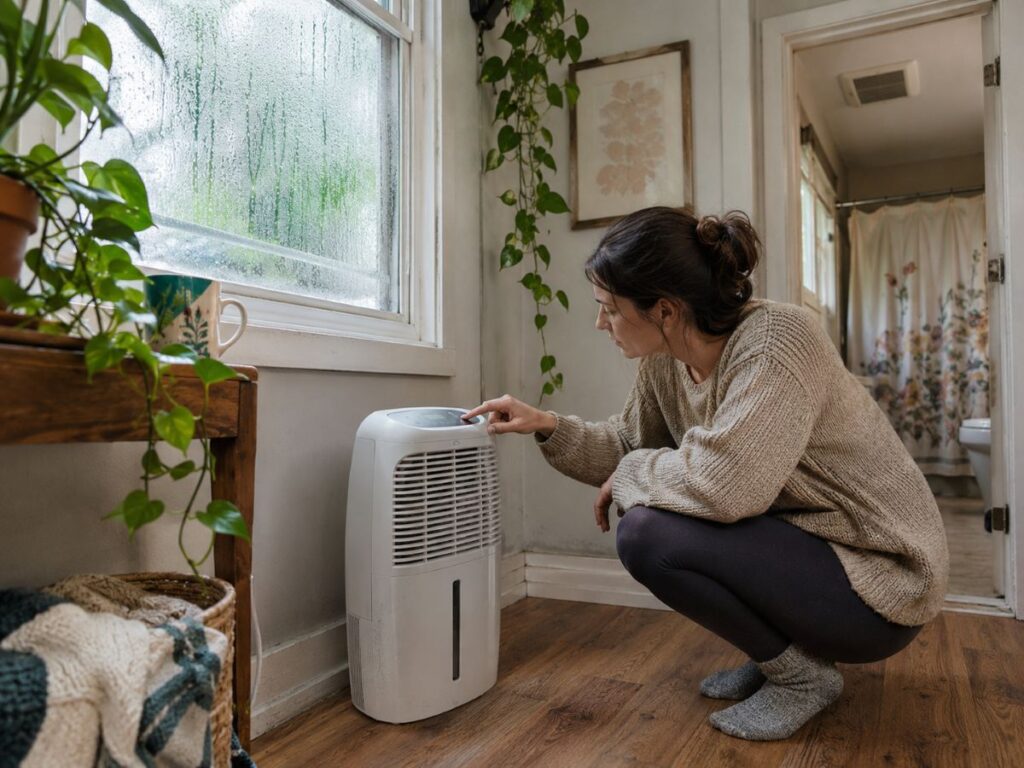
If your home feels sticky in July or your skin feels dry in January, humidity is probably the reason. Indoor humidity affects comfort, how hard your HVAC system works, and whether mold, dust mites, and static become problems. The tricky part is that the right level changes with the season and with the weather outside. This guide answers the question “what humidity should my house be,” shows how to measure it, explains what high and low readings look like, and covers what to do when your home falls outside the healthy range.
| Quick Take Aim for 30 to 50 percent relative humidity, and keep it below 60 percent. Summer readings sit at the upper end of the range, winter readings at the lower end. Measure with a hygrometer before you buy any equipment, because guessing is unreliable. |
The Ideal Indoor Humidity Range
Relative humidity compares the moisture in the air with the most the air can hold at its current temperature. The U.S. Environmental Protection Agency advises keeping indoor relative humidity below 60 percent, and ideally between 30 and 50 percent. Above that range, mold and dust mites find it much easier to grow. Below it, the air starts to feel dry and irritating.
The best number shifts a little through the year. In North Texas summers the outdoor air is warm and moist, so your air conditioner has to work to keep the inside near the middle of the range. In winter, cold fronts bring drier air and heating makes it drier still. Holding one exact number all year is neither realistic nor necessary, so a target band works better than a single figure.
| Situation | Typical Target | What to Watch For |
|---|---|---|
| Summer | 40 to 50 percent | Readings above 55 to 60 percent suggest the AC is not removing enough moisture. |
| Spring and fall | 30 to 50 percent | Open windows on damp days can raise indoor humidity quickly. |
| Winter | 30 to 40 percent | Higher readings in cold weather can cause condensation on windows. |
| Any time of year | Below 30 percent | The air is too dry, so expect static shocks and irritation. |
| Any time of year | Above 60 percent | The risk of mold, musty odors, and dust mites rises. |
These are general targets, not a rule for every house. Older homes, tightly sealed new builds, and homes with large windows can all behave differently, which is why measuring your own readings matters.
How to Measure Humidity at Home
You cannot judge humidity reliably by feel. A digital hygrometer costs little and gives you a direct reading. Place it away from kitchens, bathrooms, and vents, and let it settle for a few hours before you trust the number.
- Check more than one room: Bedrooms, the main living area, and any room that feels different from the rest can show very different readings.
- Check at different times: Morning and evening readings show how cooking, showers, and the AC cycle affect the air.
- Compare with your thermostat: Some thermostats display indoor humidity, but built-in sensors can be less accurate than a separate hygrometer.
- Track for a week: A week of readings shows whether the problem is occasional or constant.
Signs Your Humidity Is Too High
High humidity often shows up before you ever look at a meter. These are the most common signs:
- Musty odors: A stale smell in closets, bathrooms, or bedrooms often points to damp air or hidden mildew.
- Condensation: Water beads form on windows, mirrors, or cold pipes.
- Visible mold or mildew: Dark spots appear on walls, ceilings, grout, or around vents.
- A clammy feel: The house feels sticky even when the thermostat shows a normal temperature.
- Swollen or warped materials: Wood floors, doors, and trim can swell when they absorb moisture.
- An AC that never seems to catch up: Humid air makes the system run longer to reach the same level of comfort.
If this sounds familiar, our guide on how to lower humidity in house walks through the common causes and fixes.
Signs Your Humidity Is Too Low
Dry air is more common in winter, when heating runs often and cold fronts push moisture out of the air. Look for these signs:
- Static shocks: Frequent sparks when you touch doorknobs or pull off a sweater.
- Dry skin and lips: Skin feels tight or chapped, especially in the morning.
- Irritated nose and throat: Dry air can make nasal passages and throats feel scratchy.
- Gaps in wood: Hardwood floors, trim, and furniture can shrink and crack when the air stays very dry.
- Wilting houseplants: Plants dry out faster than usual even with normal watering.
What Affects Humidity in North Texas Homes
Several things push indoor humidity up or down, and most of them are easy to identify once you know where to look:
- Outdoor weather: Humid summer air enters every time a door opens and through small gaps around windows, doors, and attic hatches.
- AC performance: An air conditioner removes moisture while it cools. A system that is oversized, dirty, or short on airflow may cool the house without removing enough moisture.
- Duct leaks: Leaky ducts in an attic or crawl space can pull in humid air and spread it through the house.
- Daily activities: Showers, cooking, laundry, and houseplants all add moisture.
- Winter heating: Heating warms the air without adding moisture, so relative humidity falls.
This is why regular AC maintenance matters for comfort and not only for cooling. Clean coils, a clear condensate drain, and proper airflow all help your system pull moisture out of the air.
How to Bring Humidity Back Into Range
Start with the simple fixes, then look at equipment if the problem keeps coming back.
- If humidity is too high: Run bathroom and kitchen exhaust fans, fix any leaks, and keep your AC maintained. If readings stay high across the whole house, a whole-house dehumidifier connected to your HVAC system can handle a load that a portable unit cannot.
- If humidity is too low: Avoid overheating the house, seal obvious air leaks, and consider a whole-house humidifier, which adds moisture through your existing system. Portable humidifiers need constant refilling and cleaning, and they only cover one room.
A technician can also test your system and your ductwork, which is the quickest way to learn whether the cause is the equipment, the ducts, or the house itself. Fixing the cause is almost always cheaper than fighting the symptom with extra appliances.
Frequently Asked Questions
What is the ideal humidity for a house in summer?
Most homes feel comfortable between 40 and 50 percent in summer. Keep it below 60 percent at all times to limit mold and dust mite growth.
Is 60 percent humidity too high indoors?
It is at the upper limit. Sustained readings above 60 percent make mold growth more likely, so it is worth finding the cause and bringing the level down.
Can my air conditioner control humidity?
Yes, partly. An AC removes moisture as it cools the air, but it works best when it is the right size, clean, and well maintained. If humidity stays high even with the AC running, the system or ductwork may need attention.
Do I need a whole-house humidifier in Texas?
Many homes do not, but winter dryness can be a problem, especially with frequent heating. If you notice static, dry skin, or cracking wood even after sealing leaks, a humidifier tied into your HVAC system may help.
How often should I check indoor humidity?
Check readings for a week when you first set up a hygrometer, then spot check each season or whenever the house feels too damp or too dry.
| Ready to Get Started? Let Norco Air help you find the cause and fix it for good. Contact Us |
Why is my furnace blowing cold air and then warm?
A short burst of cool air at the start of a cycle is common because the blower waits for the heat exchanger to warm up. If it keeps alternating between cold and warm or shuts off repeatedly, the cause may be a dirty filter, a weak flame sensor, or a safety switch.
Why is my furnace running but not heating?
The blower can run even when the burner is not lighting. Common causes include a thermostat fan setting on ON, a dirty filter, an ignition or flame sensor problem, a gas supply issue, or a tripped safety switch.
Can a dirty filter make a furnace blow cold air?
Yes. A clogged filter restricts airflow, the furnace overheats, and the limit switch shuts off the burner while the blower keeps running. Replacing the filter is the first fix to try.
Is it normal for a heat pump to blow cooler air in heating mode?
Yes, to a degree. Heat pump air is warm but usually not as hot as air from a gas furnace, and it may feel cool briefly during defrost cycles. If the air is truly cold for long periods, the system should be checked.
Should I reset my furnace if it blows cold air?
Turning the furnace power off and back on once can clear a minor fault, but you should not repeat it. If the problem returns, there is an underlying issue that a technician needs to diagnose.
| Ready to Get Started? Let Norco Air find out why your furnace is blowing cold air and get your heat running again. Contact Us |