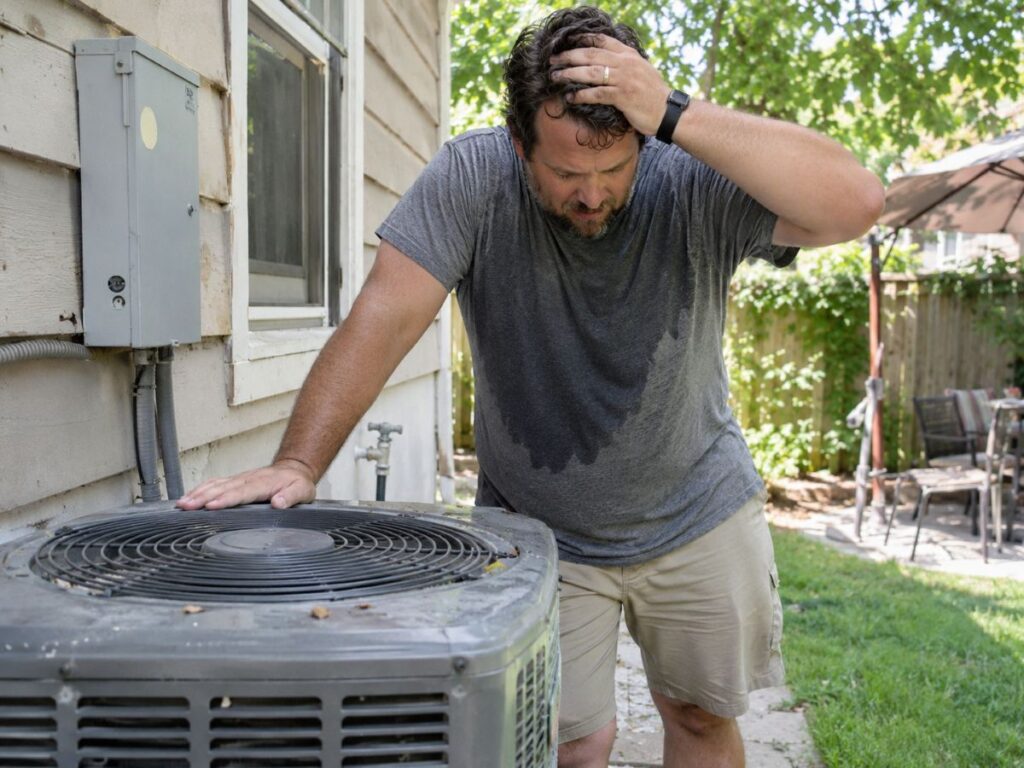
An AC freezing up in the middle of a North Texas summer sounds backwards, but it is one of the most common cooling problems homeowners run into when the heat stays high for weeks. Ice on the indoor coil or the refrigerant line means the system is not moving enough air or does not have enough refrigerant, and it will keep struggling until the root cause is fixed. A frozen unit cools poorly, drives up your electric bill, and can damage the compressor if it keeps running. This guide explains what causes an AC to freeze up, how to thaw it safely, what you can check on your own, and when it is time to call a technician.
| Quick Take Ice forms when airflow drops or refrigerant runs low, which pushes the coil below freezing. Turn the AC off, run the fan only, and let the ice melt completely before restarting. If the ice comes back, call a technician. Repeated freezing usually points to a leak or a failed part. |
What Causes an AC to Freeze Up?
Your air conditioner cools by pulling warm indoor air across the evaporator coil, where cold refrigerant absorbs the heat. The coil normally stays cold but above freezing, so moisture in the air condenses on it and drains away as water. When too little warm air reaches the coil, or the refrigerant pressure drops, the coil temperature falls below 32 degrees Fahrenheit. The moisture then freezes instead of draining, the ice insulates the coil, and airflow drops even further. That loop is why a small problem can turn into a solid block of ice in a few hours.
Most freeze-ups trace back to one of the causes below.
| Cause | What Happens | Common Signs |
|---|---|---|
| Dirty or clogged air filter | Airflow across the coil drops and the coil gets too cold | Weak airflow, dusty vents, a gray filter |
| Blocked vents or returns | Closed or covered registers restrict the air the system can move | Some rooms stay warm, furniture over vents |
| Low refrigerant | A leak lowers pressure and drops the coil temperature | Ice on the refrigerant line, hissing sounds, rising bills |
| Dirty evaporator coil | Dirt blocks heat transfer and creates cold spots | Frost patches, musty smell, longer run times |
| Failing blower motor | Not enough air moves across the coil | Weak airflow, unusual noises |
| Collapsed return duct | Return air is restricted before it reaches the coil | Uneven cooling, whistling at the return |
Signs Your AC Is Freezing Up
A freeze-up rarely appears without warning. If you notice any of the signs below, shut the system down before the ice gets thick.
- Ice or frost on the indoor unit or refrigerant line: Look at the copper line running to the outdoor unit and at the indoor coil if you can see it.
- Weak or warm airflow: Air from the vents feels weak, or the system runs without cooling the house.
- Water around the indoor unit: Melting ice can overflow the drain pan and leave puddles or stains.
- Longer run times: The AC runs almost constantly and the house still does not reach the set temperature.
- Hissing or bubbling sounds: These can point to a refrigerant leak, which is a common reason coils freeze.
How to Safely Thaw a Frozen AC
Thawing the unit correctly protects the compressor and keeps a small problem from becoming an expensive one.
- Turn the cooling off: Set the thermostat to OFF so the compressor stops running.
- Switch the fan to ON: The blower moves room air across the coil and helps the ice melt faster.
- Give it time: Light frost may clear in an hour or two, while heavy ice can take a full day. Do not chip or scrape the ice, because the coil fins and copper lines are easy to damage.
- Dry up the area: Check the drain pan and the floor around the indoor unit, and soak up any water that has spilled.
Do not restart the cooling until all the ice is gone. Running an AC with a frozen coil can push liquid refrigerant back toward the compressor, which is one of the most expensive parts in the system to replace.
What You Can Check Yourself
While the system thaws, a few quick checks can often identify the cause.
- Air filter: If it is dirty, replace it. A clogged filter is the most common and cheapest cause of a freeze-up.
- Vents and returns: Make sure every register is open and not blocked by furniture, rugs, or curtains.
- Thermostat settings: Keep the fan on AUTO and avoid setting the temperature far below what the system can reach on a hot day.
- Drain line: If water is pooling near the indoor unit, the condensate line may be clogged and should be checked.
One thing not to do is add refrigerant yourself. Handling refrigerant requires EPA Section 608 certification, and a system that is low on refrigerant has a leak, so topping it off only hides the problem for a short time.
When to Call a Professional
If the ice returns within a day or two after you replaced the filter and opened every vent, the cause is probably deeper in the system. A technician will check airflow, measure refrigerant pressure, inspect the evaporator coil and blower, and test the drain. That type of diagnosis is part of professional AC repair, and fixing a leak or a failing motor early costs far less than replacing a damaged compressor.
If the system freezes on a hot evening or weekend and the house is getting uncomfortable, emergency AC services can get a technician out to find the cause. Norco Air serves homeowners in Haltom City, North Richland Hills, Hurst, Keller, and across Tarrant County and the DFW area.
How to Prevent an AC From Freezing Up
- Change filters on schedule: Most homes need a new filter every one to three months, and our guide on how often to change your AC filter explains how to pick the right interval.
- Schedule a spring tune-up: Professional AC maintenance includes coil cleaning, refrigerant checks, and drain line inspection before the hottest months arrive.
- Keep airflow open: Leave supply and return vents uncovered and keep furniture away from returns.
- Fix small leaks early: A slow refrigerant leak gets worse over time and is a leading cause of repeat freezing.
Frequently Asked Questions
How long does it take for a frozen AC to thaw?
Light frost can melt in one to two hours with the fan running, while a heavily iced coil can take 24 hours or more. Keep the cooling off until you cannot see any ice and the coil and refrigerant line are dry.
Can I run my AC while it is frozen?
No. Running the cooling with a frozen coil reduces airflow, strains the system, and can send liquid refrigerant toward the compressor. Turn the thermostat off, run only the fan, and wait for the ice to melt.
Can a dirty air filter really make an AC freeze up?
Yes. A clogged filter restricts the air moving across the evaporator coil, so the coil gets colder than it should and moisture freezes on it. Replacing the filter is the first thing to try.
Why does my AC freeze up when it is not that hot outside?
Cooler weather can make a freeze-up more likely, especially if the system keeps running with weak airflow or a very low thermostat setting. Low refrigerant also causes freezing at almost any outdoor temperature.
Is a frozen AC an emergency?
It is not always an emergency, but it should not be ignored. If the ice keeps coming back, water is leaking inside, or the house is too hot to stay comfortable, call a technician rather than running the system.
| Ready to Get Started? Let Norco Air find out why your AC keeps icing over and get your home cooling again. Contact Us |